


Tenant vs Landlord Cleaning Responsibilities in Adelaide
Have you ever wondered who is actually responsible for cleaning a rental property at the end of a lease? The answer is not always as simple as it seems and misunderstanding these responsibilities can easily lead to disputes between tenants and landlords. From dirty carpets and stained walls to kitchen grease and bathroom mould; small cleaning issues can sometimes turn into major bond related conflicts during the final inspection.
In Adelaide, both tenants and landlords have specific responsibilities when it comes to maintaining and cleaning a rental property. While tenants are expected to leave the home reasonably clean and damage free; landlords must also understand the difference between neglect and normal wear and tear. This article will guide you on tenant vs landlord responsibilities in Adelaide. Many renters now rely on guaranteed end of lease cleaning Adelaide services to simplify the process, reduce stress and improve their chances of securing the bond refund.
Hide
Show
- Understanding General Cleaning Responsibilities
- What Tenants Are Usually Responsible For in Adelaide
- What Landlords Are Responsible For in Adelaide
- The Difference Between Damage and Wear and Tear
- Areas That Often Cause Cleaning Disputes
- Tips to Avoid Bond Cleaning Disputes
- Infographic: Landlord & Tenant Cleaning Responsibilities
- Wrapping Up
1. Understanding General Cleaning Responsibilities
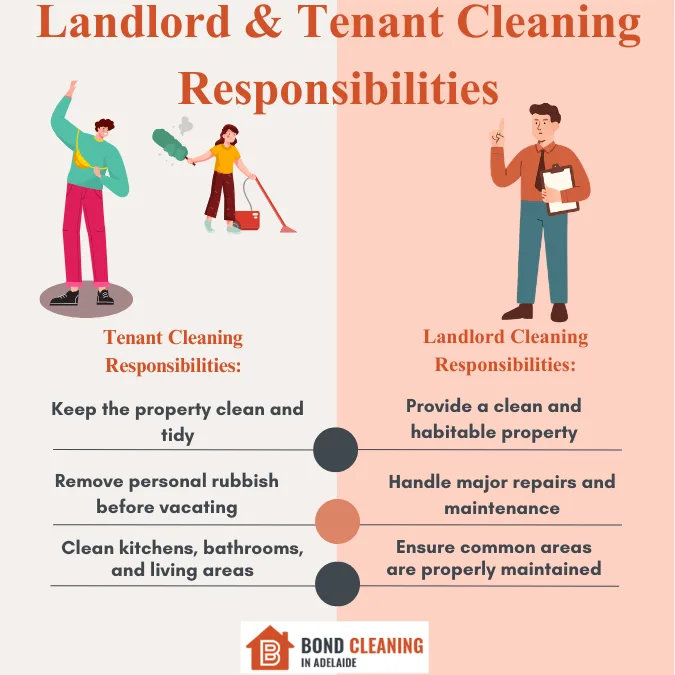
Tenants are usually responsible for keeping the property reasonably clean during their tenancy and ensuring it is returned in a similar condition to when they moved in. This includes routine cleaning tasks such as vacuuming floors, wiping surfaces, cleaning bathrooms and removing rubbish. If the property was clean at the beginning of the lease, tenants are generally expected to return it in the same state.
Landlords, on the other hand, are responsible for making sure that the property is in a safe and liveable condition before a tenant moves in. This means the home should be reasonably clean and free from health hazards. However, landlords cannot expect tenants to fix issues caused by normal wear and tear, such as faded paint or old carpets that have naturally deteriorated over time.
2. What Tenants Are Usually Responsible For in Adelaide

One of the main responsibilities of tenants is deep cleaning the property before vacating it. This often includes scrubbing kitchen appliances, cleaning windows, removing stains, and sanitising bathrooms. If the lease agreement mentions professional carpet cleaning or pest control, tenants may also need to arrange those services before handing over the keys.
Tenants are also expected to remove all personal belongings and dispose of rubbish properly. Forgotten furniture, damaged items or overflowing bins can create additional cleaning work and may lead to deductions from the bond. Many renters in Adelaide choose professional end of lease cleaning Adelaide services to ensure every area of the property meets inspection standards.
3. What Landlords Are Responsible For in Adelaide
Landlords are generally responsible for repairs and maintenance that are not caused by the tenant’s actions. For example, if mould develops because of structural issues or plumbing leaks, it is usually the landlord’s duty to fix the problem. Similarly, landlords are responsible for maintaining smoke alarms, electrical systems, and plumbing fixtures.
In terms of cleaning, landlords cannot charge tenants for problems related to ageing or natural wear. Minor carpet flattening, faded curtains, or slightly worn paint are considered normal over time. A landlord can only request additional cleaning or compensation if the tenant has left excessive dirt, damage or neglect beyond reasonable use of the property.
4. The Difference Between Damage and Wear and Tear
A common cause of disputes is the misunderstanding between property damage and fair wear and tear. Wear and tear refers to the gradual deterioration that happens naturally over time. For example, faded paint from sunlight, loose door handles or worn carpet in high traffic areas are considered normal.
Damage, however, occurs because of negligence, misuse, or accidents caused by the tenant. Large carpet stains, broken windows, holes in walls, or heavily grease covered kitchens are examples of tenant caused damage. In such situations, landlords may use part of the bond to cover repairs or additional cleaning costs.
5. Areas That Often Cause Cleaning Disputes
The kitchen is one of the most commonly disputed areas during final inspections. Ovens, stovetops, range hoods, and greasy cabinets are often overlooked by tenants. Landlords usually expect these areas to be thoroughly cleaned before the tenant leaves the property.
Bathrooms are another major concern. Soap scum, mould, dirty grout, and hard water stains can quickly become inspection issues. Outdoor areas such as balconies, garages, and gardens can also create disagreements if they are not maintained properly. Choosing professional end of lease cleaning Adelaide experts can help tenants avoid missing important areas during the final clean.
6. Tips to Avoid Bond Cleaning Disputes
One of the best ways to avoid misunderstandings is discussing expectations before the final inspection, which can help both parties stay on the same page.
Here are a few simple tips to make the process easier:
- Check the entry condition report carefully.
- Compare the property’s condition before and after your tenancy.
- Take photos before moving in and after moving out.
- Start cleaning early.
- Focus on kitchens and bathrooms.
- Fix small damages if possible.
- Remove all rubbish and personal items.
- Check the lease for cleaning requirements.
- Hire professional cleaners if needed.
- Talk with the landlord or agent before the final inspection.
- Clear communication can help avoid disputes.
Infographic: Landlord & Tenant Cleaning Responsibilities
Wrapping Up
Understanding tenant and landlord cleaning responsibilities is essential for a smooth end of lease experience in Adelaide. While tenants are responsible for returning the property in a clean condition, landlords must also recognise the difference between genuine damage and normal wear and tear. Whether you are a tenant preparing to move out or a landlord getting ready for a final inspection, staying informed about cleaning obligations can save time, money, and stress.