


What “Fair Wear and Tear” Means in Rental Property
Are you worried about your security deposit when vacating a rental property in Adelaide? The majority of tenants face rental disputes and disagreements, either due to substandard cleaning or property damage beyond reasonable wear and tear. Under the South Australian Tenancy Laws, a rental apartment or house must be returned in a reasonably clean condition, minus normal deterioration of the property. Take this as your foremost tenant responsibility.
However, a large number of renters struggle to understand the real meaning of normal wear and tear, and don’t fix the damage caused by them during a tenancy. That’s where the problem begins. Worry not! Today, we will discover everything about ‘fair wear and tear’ in rental property and the best ways to prevent bond deductions. Make sure you refer to your property condition report, know your duties and hire experts for a guaranteed end of lease cleaning Adelaide for your hard earned bond money.
Let’s Get Started!
Hide
Show
- What is ‘Normal Wear and Tear in SA Tenancy Laws?
- The Examples of ‘Fair Wear & Tear’ in Adelaide Rentals
- What is Property Damage Beyond Reasonable Wear and Tear
- Landlord Vs Tenant: Who is Responsible for Property Damage or Deterioration
- How to Secure Bond Money when Moving Out?
- What if Property Manager Fails Bond Clean Over Fair Wear and Tear?
- Infographic: A Property Manager’s Guide to Green vs Chemical Cleaning in Adelaide
- Wrapping Up
1. What is ‘Normal Wear and Tear in SA Tenancy Laws?
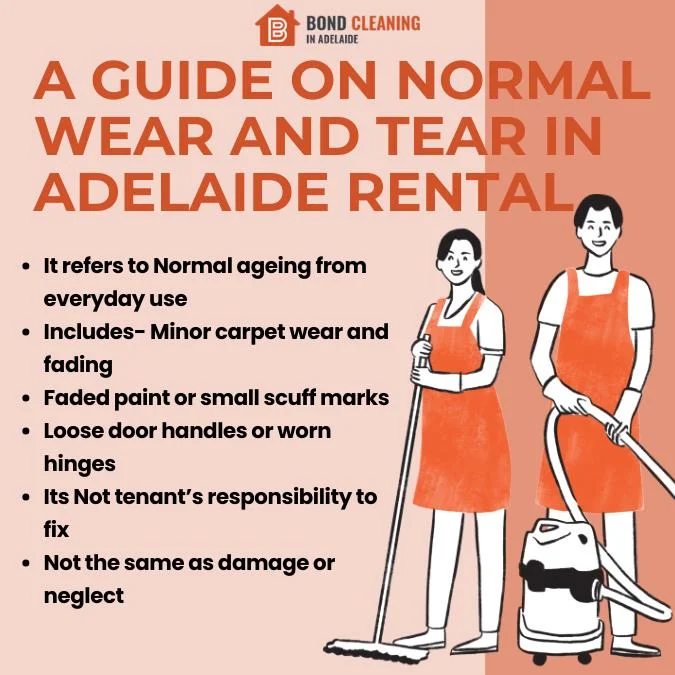
According to the rental rules in SA, reasonable wear and tear is normal deterioration of a property due to everyday use. This includes faded wall paint, worn carpets, etc. Ageing of a rental property is also considered reasonable wear and tear. This means landlords can’t deduct or dispute over it at the end of a tenancy. The best part is that tenants are not responsible for pre existing damage or the poor condition of a rental.
However, you can claim your bond if you fail to remove dirt, grime, gunk and grease during your tenancy. It is good to click photos before signing an entry condition report. This will help you raise a dispute in case of unfair bond deductions over property damage.
2. The Examples of ‘Fair Wear & Tear’ in Adelaide Rentals

Landlords or property managers can’t deduct your bond in the following conditions:
- Fading of wall paint over time
- Worn carpets due to daily usage
- Mild plaster cracks
- Minor cracks in window panes due to warped frames
- Worn kitchen benchtop
- Lose door handle hinges.
- Water marks on walls and carpets due to seepage or rain
- Scuff marks on wooden floors
They expect natural deterioration when inspecting the property.
3. What is Property Damage Beyond Reasonable Wear and Tear
Damage to a rental home, fixtures and fittings caused by renters or tenants, or by an approved pet, is excluded from fair wear and tear. Visible dirt, dust, stubborn stains, and worn carpets due to negligence, scrubbing, or lack of maintenance are subject to bond deductions and hefty penalties.
You should understand your responsibility and fix issues before hiring experts for a top quality end of lease cleaning Adelaide:
- Intentional chipped wallpaper
- Damaged glass doors
- Visible scratches on cabinets, benchtop and other surfaces due to negligence
- Paint discolouration due to cooking grease or smoke
- Damaged wall due to adhesive posters and decoration pieces
- Damage to the structure due to pests and mould
The chances of failing a bond clean increase when a landlord encounters these damages in the property.
4. Landlord Vs Tenant: Who is Responsible for Property Damage or Deterioration
There is no denying that a rental property must be handed over in a clean and livable condition. It must be in the same condition as when you first moved in.
As a tenant, you are responsible for repairing damage caused by your negligence, misuse, or intentional acts during your lease. You can seek permission to fix problems and hire experts accordingly.
Conversely, landlords are responsible for repairing normal wear and tear to the property. A rental property must meet the minimum living standards in South Australia for a new tenant i.e free from dirt, dust, mould and mildew. Make sure you rectify basic flaws, damaged roofs, clogged gutters and damaged decks due to weather conditions.
5. How to Secure Bond Money when Moving Out?
After fixing damage, make sure you deep clean every nook and cranny of the property to secure your bond. Make sure you follow a standard end of lease cleaning checklist and go room by room to tackle dirt, grime and grease.
It is always good to start from the top, such as ceiling fans, air vents and walls, and make your way down towards windows, tracks, kitchen appliances. Make sure you pay special attention to damp or moist areas, as landlords may withhold your bond due to mould. It is good to include add on services when hiring experts for a quality end of lease cleaning Adelaide and pay only for what you need.
They clean kitchen appliances, windows (inside and out), bathroom fixtures and fittings, vacuum carpets, rugs, walls, and tile grouts, etc., to prevent unnecessary disputes.
6. What if Property Manager Fails Bond Clean Over Fair Wear and Tear?
In such a situation, tenants in Adelaide have the right to clearly dispute the claim. Under SA tenancy laws, property managers can’t charge tenants for fair wear and tear. If it happens, you can present your time stamped photos and evidence to the mediator. If the issues remain unsolved, lodge a bond dispute via CBS South Australia or apply to SACAT. The formal body will decide based on the evidence and tenancy laws.
Infographic: A Guide On Normal Wear And Tear In Adelaide Rental
Wrapping Up
Every tenant should understand their roles, responsibilities and duties to prevent unfair deductions. This article has helped you understand the key difference between fair wear and tear and damage caused by tenants, to prevent bond deductions and disputes.